0
US Dollar Index
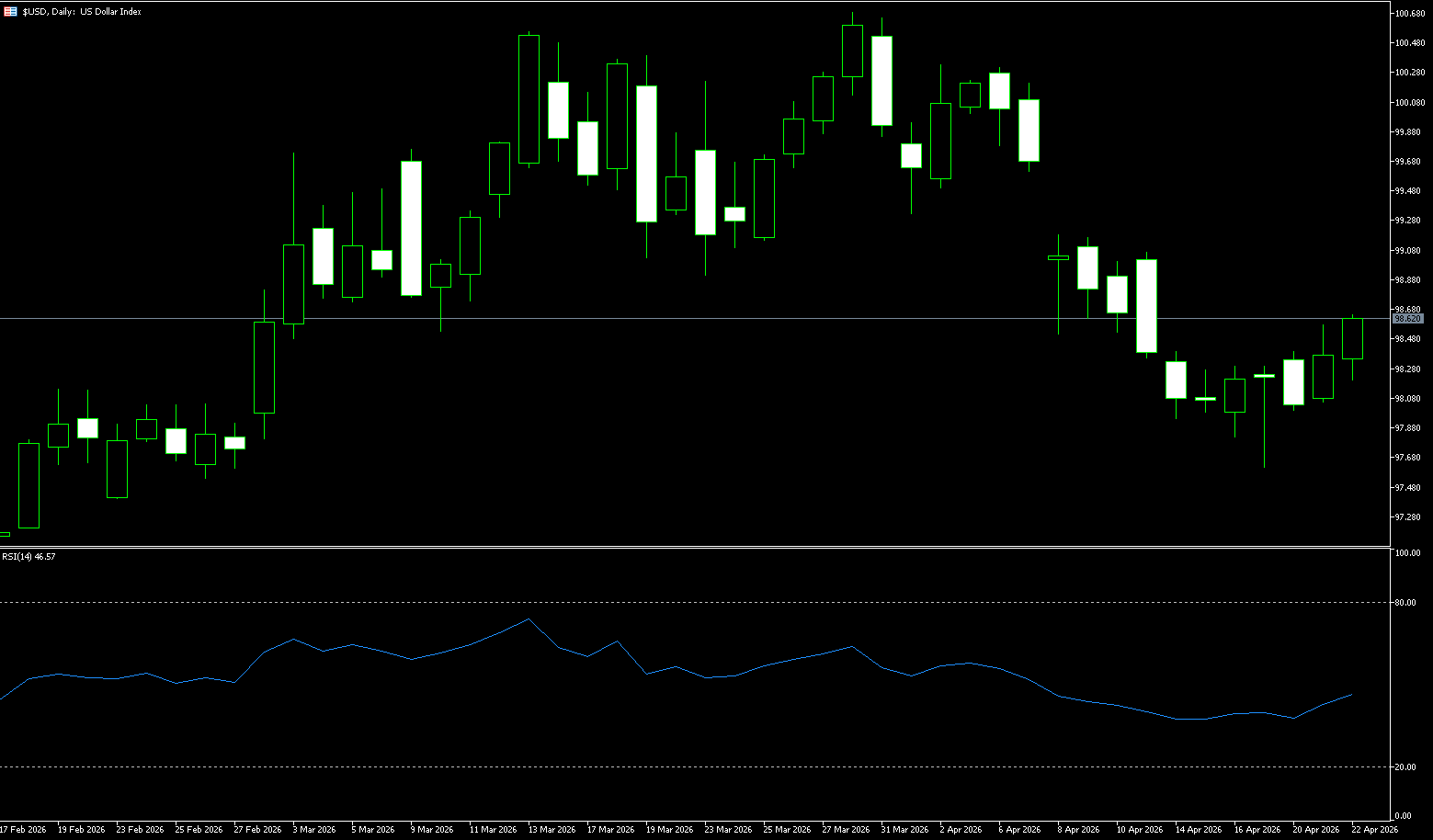
The US dollar index rose 0.36% to 98.57 at the start of the week, reaching a one-week high, as uncertainty surrounding the prospects for a US-Iran ceasefire intensified, with investors concerned about the potential continuation of shipping disruptions in the Strait of Hormuz. With only one day remaining in the ceasefire, US troops boarded an Iranian oil tanker at sea, after which Iran stated it had not yet decided whether to participate in peace talks. Meanwhile, White House officials stated that US Vice President Vance had not yet departed for Pakistan, following conflicting reports about his itinerary that had volatilely impacted markets. The euro fell 0.44% to $1.1736, the yen fell 0.37% to 159.39 yen, and the pound fell 0.29% to $1.3493. Federal Reserve Chairman nominee Warsh called for "systemic reform" at his Senate hearing, including new methods for controlling inflation and reforming communication mechanisms. Furthermore, US retail sales in March exceeded expectations, primarily driven by record-high gasoline revenues at gas stations due to war-driven price increases and tax rebates. Traders estimate a 30% probability of a 25-basis-point rate cut by the Federal Reserve this year.
Unexpectedly strong retail data provided short-term support for the US dollar, but the sustainability of the rebound is limited by declining actual purchasing power. The market experienced significant two-way volatility immediately after the data release. The US dollar index briefly surged to 98.57 but quickly retreated. Given the current risk environment for the US dollar, it tends to maintain a defensive stance as long as negotiations continue; conversely, it may turn strong if tensions escalate. While the US dollar index did not experience a one-sided rally, intraday volatility remained low, reflecting cautious positioning by traders awaiting a clear catalyst. The concurrent corporate earnings season and slight gains in US stock futures did not fully offset the support for the dollar from geopolitical factors. On the downside, the dollar may find technical support near the 98.00 (psychological level) area and rebound. A break below this level would target 97.82 (last week's low). As for the upside, the 200-day simple moving average at 98.53 should be considered, followed by the 99.00 (psychological level).
Today, consider shorting the US Dollar Index at 98.64, with a stop-loss at 98.75 and targets at 98.30 and 98.20.
WTI Crude Oil
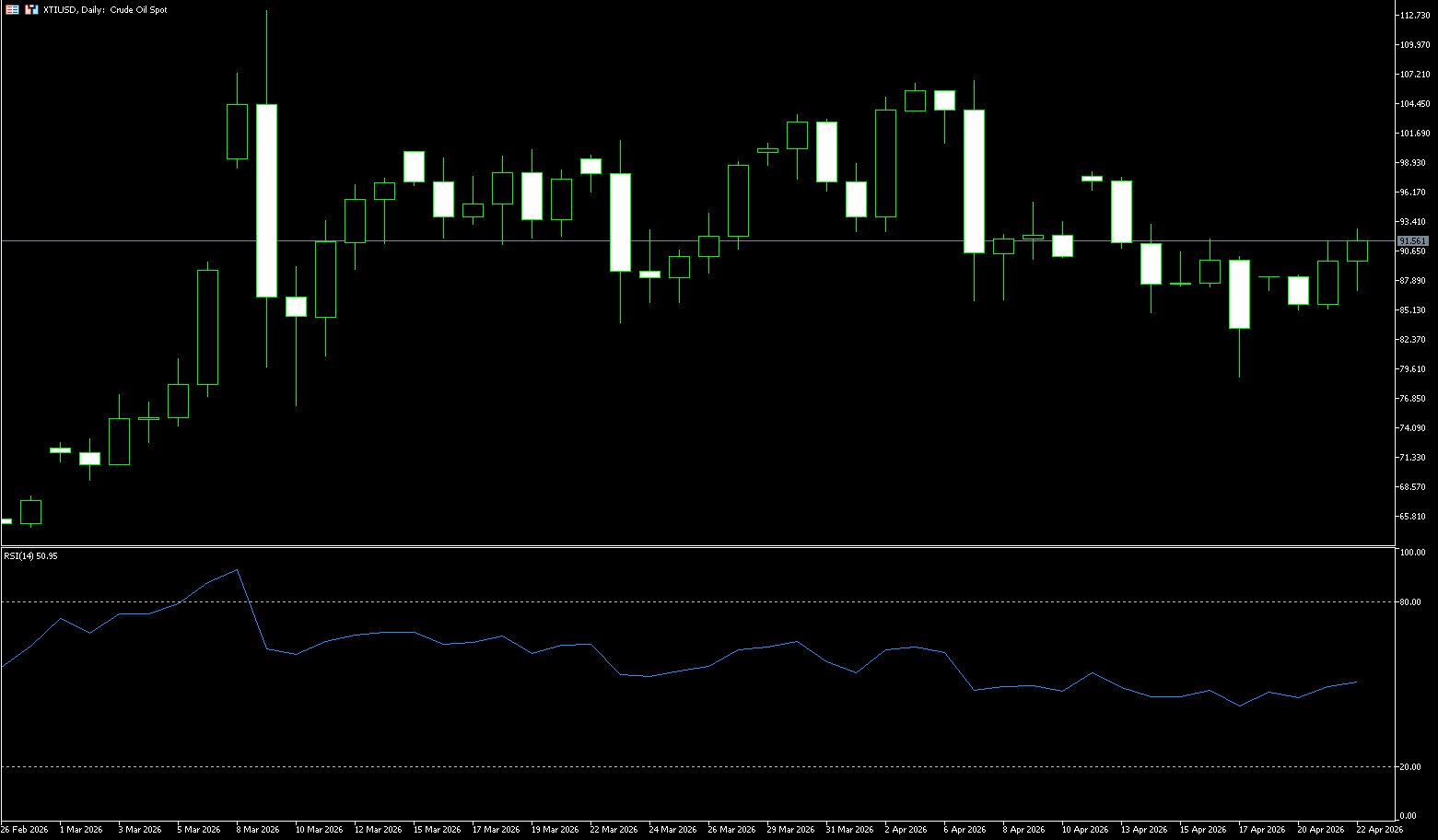
WTI crude oil rose to around $92 a barrel on Wednesday after shipping near Iran was attacked again. Maritime authorities said a Liberian-flagged container ship was fired upon by a gunboat linked to Iran's Islamic Revolutionary Guard Corps. In a separate incident, two other departing cargo ships were also targeted. These attacks mark the latest escalation of tensions in the region, with waterways remaining highly volatile. Earlier, Iran said it had received signals that the US might be willing to end the blockade and potentially resume negotiations, while President Donald Trump extended the ceasefire but warned that restrictions would remain in place until negotiations concluded. Iran stated it would not reopen the Strait of Hormuz as long as US naval interception continues. The ongoing disruptions have exacerbated serious supply concerns, with estimates of demand disruption approaching 4 to 5 million barrels per day, representing about 5% of global supply, with Asia being the most affected.
The core driver of this round of oil price premium collapse lies in the fact that speculative premiums are being cleared out in tandem with diplomatic dialogue signals. The trading logic has shifted from panic pricing based on the physical blockade of the Strait of Hormuz to a reassessment of supply volume and price in anticipation of a potential agreement followed by a supply recovery. The market needs to closely monitor any substantial progress in the Islamabad talks—this is not only a key indicator of whether the WTI-Dubai price spread can stabilize, but will also directly influence crude oil supply and demand expectations and market risk appetite: if negotiations break down and the ceasefire ends, oil prices are likely to see another surge; if both sides reach a compromise, the fading geopolitical premium will put significant downward pressure on oil prices. Technically, WTI crude oil remains at the massive volume level of the April 8th ceasefire, indicating that the ceasefire will bring a one-step adjustment in oil prices, but the long-term oil price center will continue to shift upward due to the supply gap caused during the war. Overall, the market remains in a volatile structure. The $93.37 (30-day moving average) and the $95 psychological level constitute the core resistance above. If the bulls cannot effectively break through this level in the short term, the upside potential will be limited. On the downside, $85 provides short-term support. A break below this level could lead to a further decline towards the key support zone of $84.03 (50-day moving average).
Today, consider going long on crude oil at $91.80, with a stop-loss at $91.60 and targets of $94.00 and $95.00.
Spot Gold
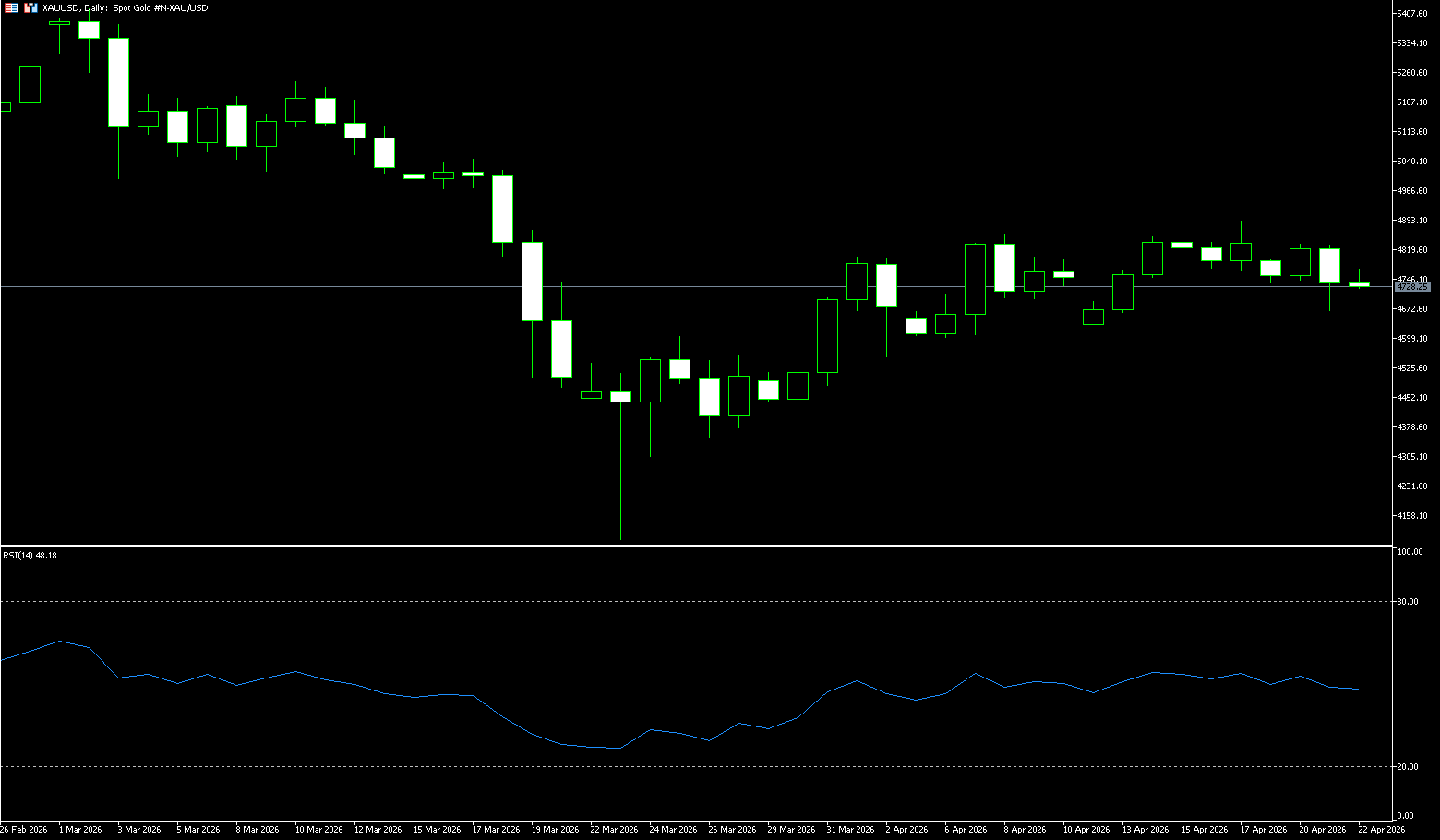
On Wednesday morning in European trading, spot gold rebounded slightly, trading around $4,740 per ounce. Gold prices hit a more than one-week low on Tuesday after Iran refused to attend the second round of US-Iran talks, Trump announced an extension of the ceasefire, and Vance temporarily postponed his trip to Pakistan to negotiate with Iran. Meanwhile, Federal Reserve Chairman nominee Warsh called for "systemic reform" at his Senate hearing, including new methods for controlling inflation and reforming communication mechanisms. Rising yields and a stronger dollar pressured gold prices, while conflicting signals from the Iranian situation pushed up energy prices, also weighing on the metal. At the same time, Warsh's call for "systemic reform" at the hearing, including new methods for controlling inflation and reforming communication mechanisms, led the market to expect significantly increased volatility during the hearing. Meanwhile, conflicting signals regarding the situation in Iran have driven energy prices upward, putting downward pressure on the precious metals market.
Gold prices are showing a clear short-term downtrend within the daily chart framework, and are generally in a consolidation phase after a breakout, searching for a bottom. Since the previous surge and subsequent pullback, prices have consistently traded below the 40-day simple moving average, currently around $4,882.50. The Bollinger Bands are widening downwards, and prices briefly fell below $4,668. Currently, the bullish rebound is weak and has failed to establish a significant breakout. Regarding support and resistance, considering chart signals and recent technical trends, there is currently no clear and effective support level below the $4,700 (psychological level). Support can be referenced at Tuesday's low of $4,668. If prices continue to fall, gold is likely to begin a further downward trend, approaching the previous low of $4,632 on April 13th. Further resistance levels are at $4,781, near the 34-day simple moving average, followed by the 50-day simple moving average near $4,882, and the key resistance level around $4,900. Both of these levels represent important defensive zones for the bulls in the past. If prices rebound to these areas, they are likely to encounter strong selling pressure, consistent with the recent technical characteristic of weak gold price rebounds.
Today, consider going long on spot gold at 4,735, with a stop loss at 4,730 and targets at 4,780 and 4,790.
AUD/USD
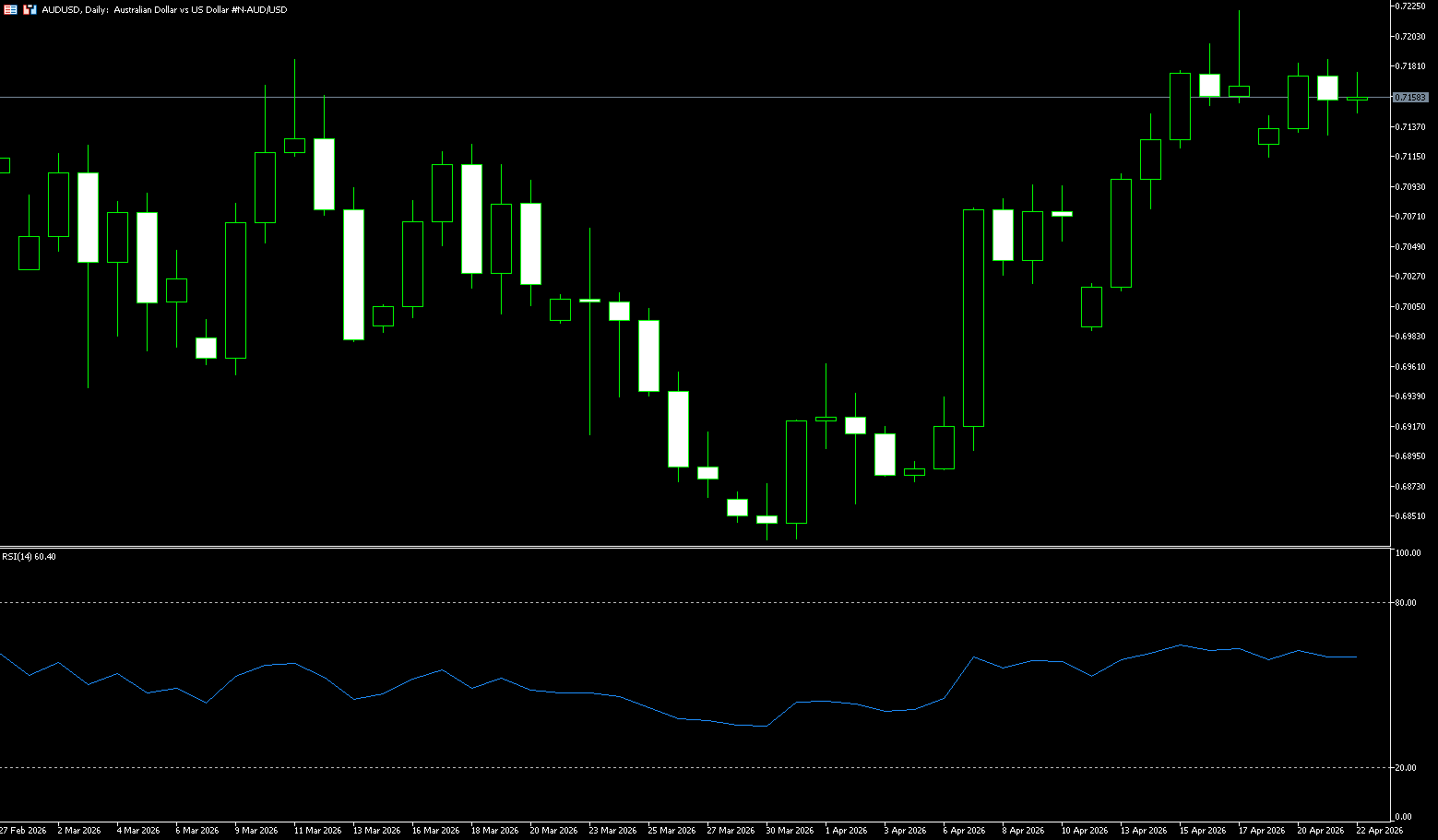
The Australian dollar has stabilized after recently falling below US$0.72, but remains near four-year highs as markets weigh the collapse of plans for a second round of US-Iran peace talks. Diplomatic momentum weakened after President Trump took steps to extend the ceasefire, but Iran indicated it would not participate in negotiations. Tehran also stated it would keep the Strait of Hormuz closed as long as US naval interceptions continue, hinting it might not adhere to the ceasefire agreement. Diplomatic setbacks and escalating tensions in the Middle East dampened risk sentiment, pushing the US dollar higher due to safe-haven demand. Domestically, focus remains on policy, with Reserve Bank of Australia Deputy Governor Andrew Hauser reiterating the central bank's commitment to anchoring inflation expectations. This strengthened expectations of further policy tightening, with the market currently pricing in a 77% probability of a rate hike next month and another possible move by September. Investors are now awaiting the upcoming Purchasing Managers' Index (PMI) data for clearer signals on economic momentum.
On the daily chart, the Australian dollar is trading lower against the US dollar around 0.7160. However, the price maintains a constructive bullish bias as it continues above the 50-day simple moving average at 0.7048 and sustains the broader uptrend that began in the 0.69 area. The pair is consolidating near recent highs, and the uptrend support line projected from 0.6585, with a key reference level around 0.6922, continues to support the gains. Momentum remains supportive, with the 14-day Relative Strength Index (RSI) hovering above 60.00, suggesting that buyers remain in control of the short-term movement and the price has not yet entered overbought territory. On the downside, initial support is seen at the 0.7100 (psychological level), followed by stronger trend support consistent with the uptrend line, around the 50-day simple moving average at 0.7048. As long as prices remain above these support levels, pullbacks are likely to be absorbed, keeping the path of least resistance pointing upwards. On the upside, spot prices may target a recapture of the multi-year high around 0.7222. A clear close above 0.7222 would push the pair further towards 0.7300.
Consider going long on the Australian dollar today at 0.7150, with a stop-loss at 0.7140 and targets at 0.7200 and 0.7190.
GBP/USD
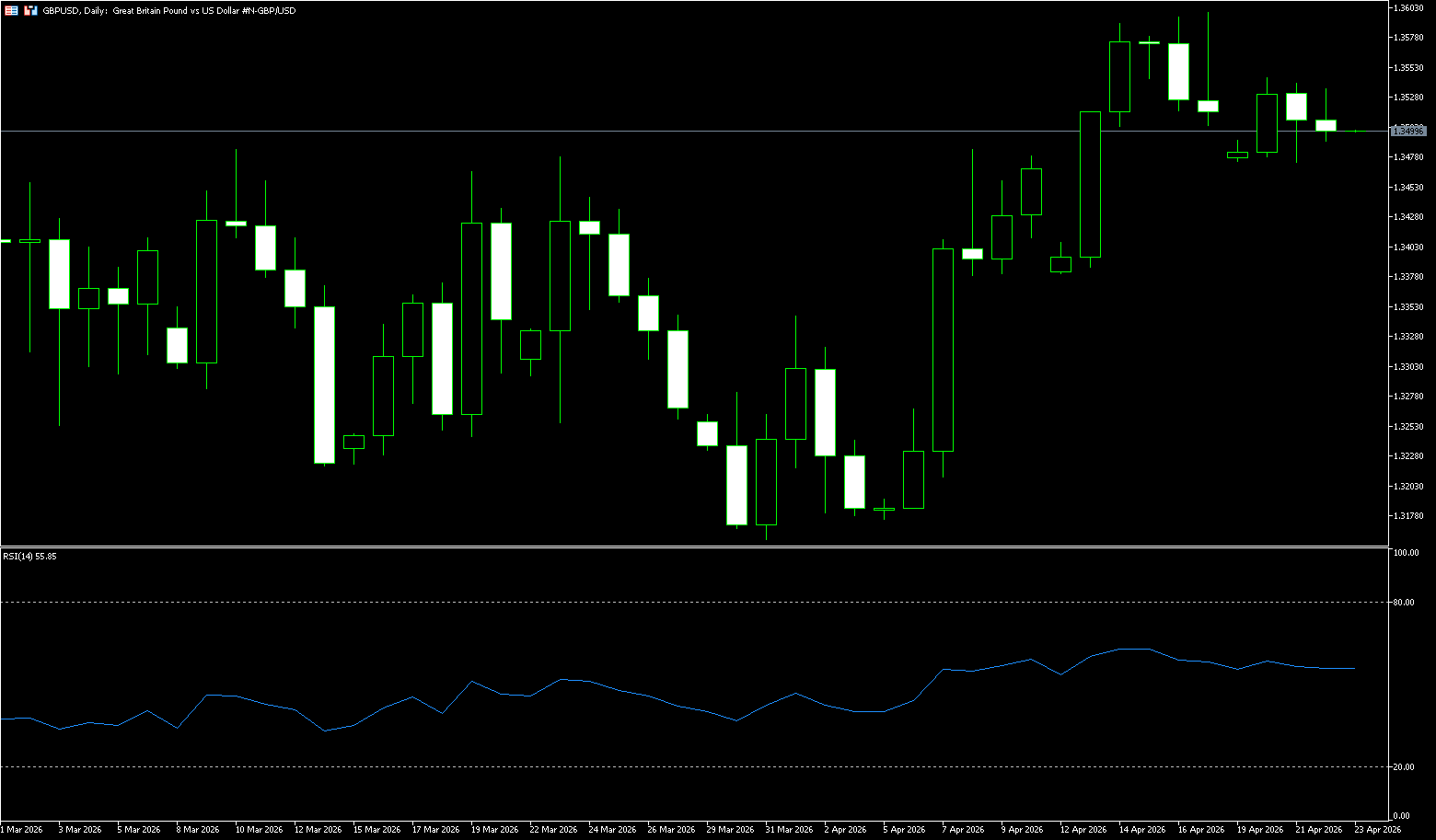
The pound remained flat against the dollar after a slight decline in the previous session, hovering around 1.3500 in Asian trading on Wednesday. The pair saw little movement as the dollar held steady following a Bloomberg report that US President Trump would extend the ceasefire with Iran until negotiations progressed.
The report stated that Vice President Vance canceled his planned trip to Islamabad for negotiations after informing Washington via Pakistan from Tehran that he would not attend the meeting. The dollar found support against major currencies, boosted by stronger-than-expected US retail sales data released on Tuesday. The US Census Bureau reported that retail sales rose 1.7% month-over-month in March, higher than the revised 0.7% in February (revised from 0.6%) and exceeding market expectations of 1.4%. On an annualized basis, March retail sales grew 4.0%, unchanged from February. In the UK, Tuesday's March employment data was mixed. The ILO unemployment rate fell to 4.9%, better than the market expectation of 5.2%. However, the number of people claiming benefits increased by 26,800, higher than the expected 21,400, while three-month employment change slowed to 25,000 from 84,000 previously.
The pound continued its strong upward momentum against the dollar at the start of the week and gained some follow-through. Despite the failure of the US-Iran peace talks over the weekend, investors continued to shift towards risk assets, hoping that diplomatic doors remained open and negotiations would continue. This, in turn, weakened the appeal of the safe-haven dollar, becoming a driving force for the pair. On the daily chart, GBP/USD is trading around 1.3500, maintaining a constructive bullish bias, with the spot price holding above the 20, 50, 100, and 200-day simple moving averages. The convergence of these moving averages suggests that the downside has been absorbed, while the Relative Strength Index (RSI) (14) is around 58, indicating solid but not excessive upward momentum, meaning there is still room for further gains as long as buyers hold the nearby moving average support. Initial resistance is seen at the 1.3545 level (this week's high), followed by resistance at 1.3600 (a psychological level). Immediate support is seen at 1.3458 (the 100-day simple moving average), then 1.3400 (the psychological level); a break below this area would invalidate the current bullish pattern.
Consider going long on GBP at 1.3490 today, with a stop loss at 1.3480 and targets at 1.3540 and 1.3550.
USD/JPY
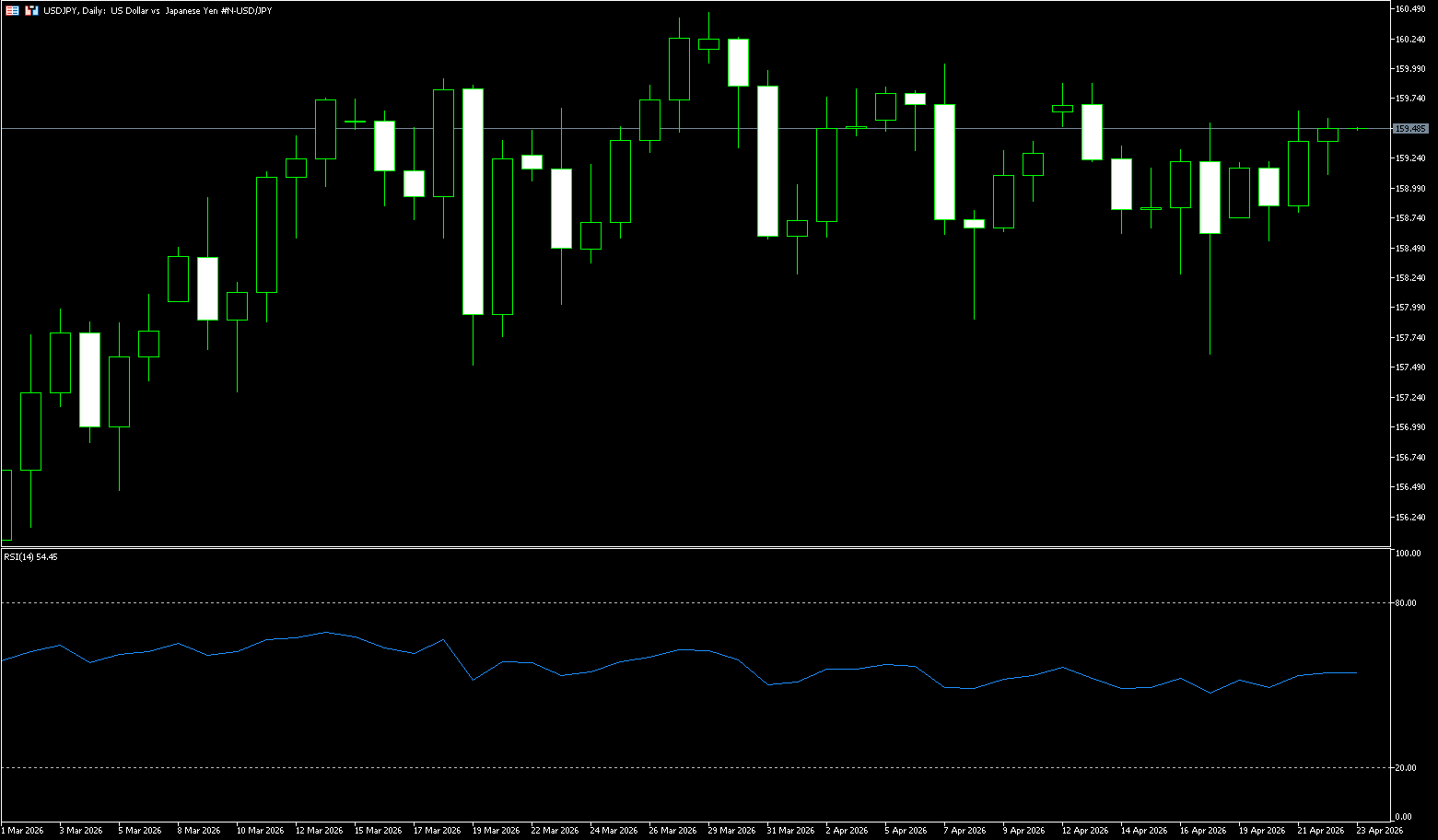
USD/JPY traded around 159.30 against the dollar on Wednesday, falling for the second consecutive day as investors weighed the policy outlook ahead of next week's Bank of Japan meeting. Reports indicate the central bank is likely to keep interest rates unchanged this month while assessing the economic impact of the Middle East conflict, although it may signal policy normalization as early as June. The Bank of Japan is also expected to raise its inflation forecast while lowering its growth expectations, reflecting rising energy costs and broader headwinds related to the war with Iran. On the data front, Japanese exports rose for the seventh consecutive month, supported by strong demand from China and ASEAN economies. The yen also faces additional pressure from a stronger dollar due to the breakdown of the planned second round of US-Iran peace talks, despite President Trump extending the current ceasefire agreement.
Driven by geopolitical tensions and divergent expectations regarding US and Japanese economic data and monetary policy, the USD/JPY exchange rate rebounded above the 159.00 level. However, the exchange rate remains within its previous trading range, facing significant resistance at the psychological level of 160.00. The market is currently awaiting further guidance from the final outcome of the US-Iran negotiations and the Warsh testimony, and the short-term range-bound trading pattern for USD/JPY remains unchanged. Technically, the daily RSI remains above 50, indicating a neutral market lacking clear trend momentum. Short-term price action shows sideways movement, fluctuating between 158 and 160. The converging moving averages suggest a lack of clear trend, implying continued range-bound trading in the short term. Key resistance levels are at 160.00 (psychological level) and 160.46 (previous high). A decisive break above these levels could lead to a further test of the 162.00 area. On the downside, key support lies at 158.00 (the psychological level) and the 50-day simple moving average area around 157.89.
Consider shorting the US dollar today at 159.60, with a stop loss at 159.80 and targets at 158.60 and 158.70.
EUR/USD
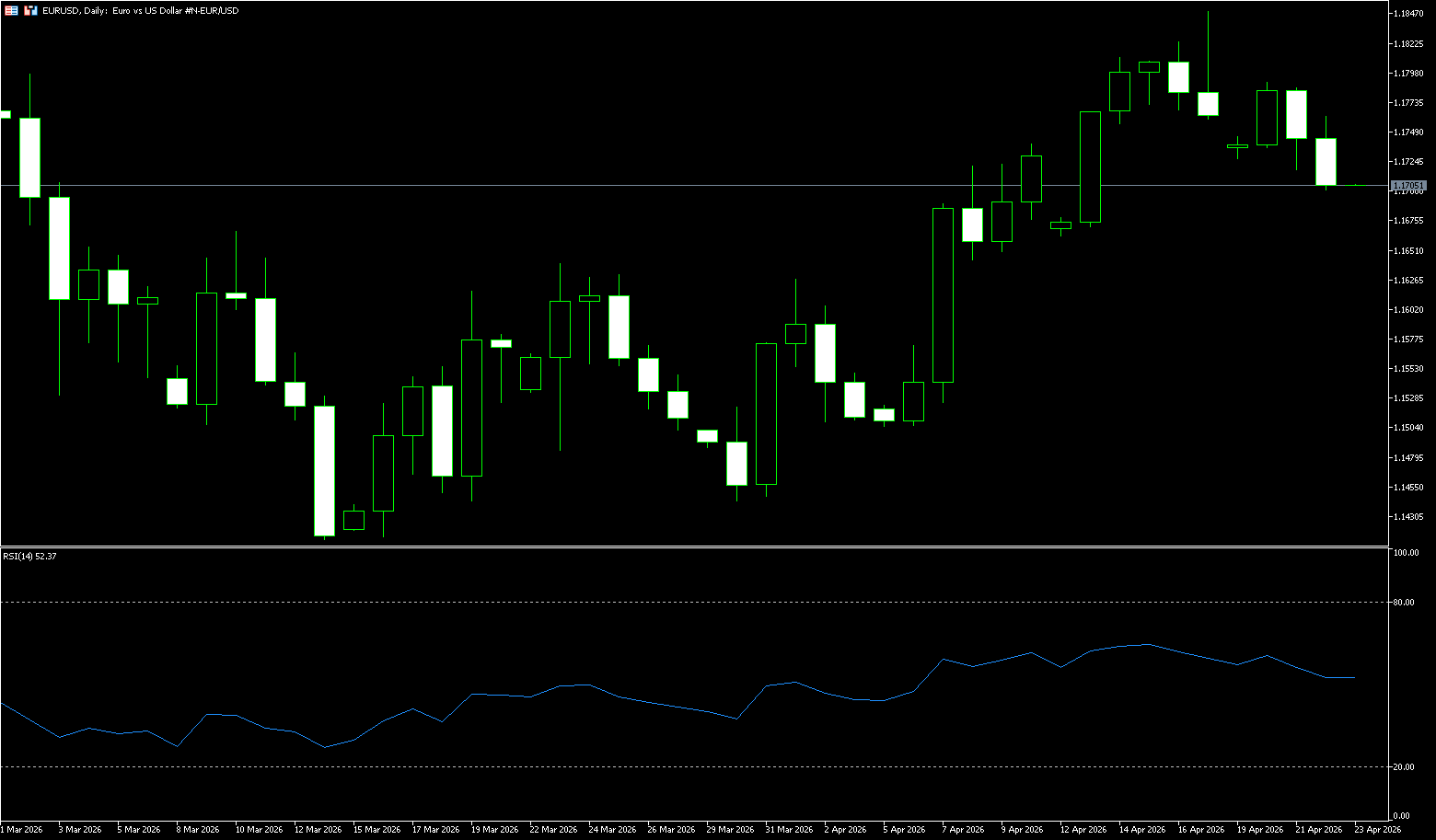
The euro weakened around 1.1710 in early Asian trading on Wednesday. The ongoing conflict between the US and Iran, and uncertainty surrounding the potential blockade of the Strait of Hormuz, weighed on the euro against the dollar. US President Trump announced Tuesday evening that he would indefinitely extend the ceasefire agreement with Iran, which was scheduled to expire the following day, despite the breakdown of plans for a new round of negotiations between the two countries. Meanwhile, an aide to Iran's chief negotiator accused Trump of using the extension of the temporary ceasefire as a "delaying tactic." Given Trump's repeated threats, the Iranian military warned of a strong attack on predetermined targets. Uncertainty surrounding the US-Iran peace talks could boost safe-haven currencies such as the dollar and create resistance for the major currency pair in the short term. Traders will be watching the preliminary readings of the Eurozone and German HCOB Purchasing Managers' Index (PMI) to be released on Thursday. Stronger-than-expected results could provide some support for the euro.
From a technical perspective, the daily chart shows a bullish trend for EUR/USD in the short term, as the price has clearly stabilized above its key moving averages. The 50-day simple moving average (SMA) at 1.1664 provides the first layer of dynamic support, while the 100- and 200-period SMAs cluster around 1.1707/1.1676, at lower levels, suggesting a solid upward trend on the basis. Momentum indicators remain constructive, rising within positive territory, while the 14-day Relative Strength Index (RSI) hovers around 58, indicating that buying pressure persists even as the price climbs to new highs. Immediate resistance is located around 1.1800 (a psychological level), followed by 1.1830, the price high at the end of February. A break above this level would target the next resistance at 1.1900. Initial support is seen at the 100-day SMA at 1.1707, while the 50-day SMA at 1.1664 strengthens the deeper support zone, where buyers are expected to re-enter if the current rally pauses or retraces.
Consider going long on the Euro today at 1.1690, with a stop-loss at 1.1680 and targets at 1.1750 and 1.1760.
Disclaimer: The information contained herein (1) is proprietary to BCR and/or its content providers; (2) may not be copied or distributed; (3) is not warranted to be accurate, complete or timely; and, (4) does not constitute advice or a recommendation by BCR or its content providers in respect of the investment in financial instruments. Neither BCR or its content providers are responsible for any damages or losses arising from any use of this information. Past performance is no guarantee of future results.
Lebih Liputan






Pendedahan Risiko:Instrumen derivatif diniagakan di luar bursa dengan margin, yang bermakna ia membawa tahap risiko yang tinggi dan terdapat kemungkinan anda boleh kehilangan seluruh pelaburan anda. Produk-produk ini tidak sesuai untuk semua pelabur. Pastikan anda memahami sepenuhnya risiko dan pertimbangkan dengan teliti keadaan kewangan dan pengalaman dagangan anda sebelum berdagang. Cari nasihat kewangan bebas jika perlu sebelum membuka akaun dengan BCR.
BCR Co Pty Ltd (No. Syarikat 1975046) ialah syarikat yang diperbadankan di bawah undang-undang British Virgin Islands, dengan pejabat berdaftar di Trident Chambers, Wickham’s Cay 1, Road Town, Tortola, British Virgin Islands, dan dilesenkan serta dikawal selia oleh Suruhanjaya Perkhidmatan Kewangan British Virgin Islands di bawah Lesen No. SIBA/L/19/1122.
Open Bridge Limited (No. Syarikat 16701394) ialah syarikat yang diperbadankan di bawah Akta Syarikat 2006 dan berdaftar di England dan Wales, dengan alamat berdaftar di Kemp House, 160 City Road, London, City Road, London, England, EC1V 2NX. Entiti ini bertindak semata-mata sebagai pemproses pembayaran dan tidak menyediakan sebarang perkhidmatan perdagangan atau pelaburan.


 English
 简体中文
简体中文
 繁體中文
繁體中文
 Bahasa
Melayu
Bahasa
Melayu
 Tiếng
Việt
Tiếng
Việt
 ไทย
ไทย
 日本語
日本語
 한국어
한국어
 ភាសាខ្មែរ
 español